
The AquaTerra Ozonator Explained: How It Works, Signs It's Failing, and When to Replace It
Posted by HTSS Team on Aug 24th 2026
The AquaTerra Ozonator Explained: How It Works, Signs It's Failing, and When to Replace It
Every AquaTerra spa comes with a factory-installed ozonator, but most owners never think about it until water quality starts slipping for no obvious reason. Unlike a filter or a cover, the ozonator does its job invisibly, in the background, with no flip indicator or app alert to tell you when it's no longer working. Knowing what it actually does, what its typical lifespan looks like, and how to tell when it's failed is the difference between catching a problem early and chasing cloudy water for weeks without knowing why.
This guide covers how the ozonator works, what it does and doesn't replace, the signs it's failing, its expected lifespan, how it pairs with your sanitizer choice, and how it fits into your broader water care routine overall.
What Does the Ozonator Actually Do?
An ozonator generates ozone (O3), a powerful oxidizer that breaks down organic contaminants (body oils, lotions, sweat, and other bather byproducts) making them easier for your filter to catch. Ozone works continuously in the background, reducing the workload on both your filter and your chemical sanitizer, which is why AquaTerra includes one standard rather than as an upgrade.
CD vs. UV Ozonators
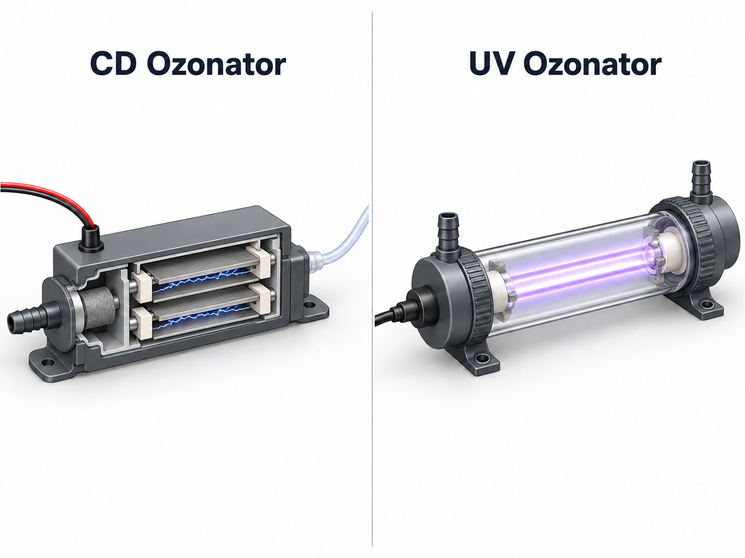
There are two common ozonator types. Corona discharge (CD) ozonators use an electrical charge across a small chip or electrode to generate ozone, and are known for durability, the core CD components can last close to a decade. UV ozonators generate ozone using a UV bulb similar in principle to a UV water purifier, and typically need bulb replacement every three to five years, or sooner if usage is heavy. Check your owner's manual or the equipment compartment to confirm which type your spa uses, since maintenance and replacement parts differ between the two.
Why AquaTerra Includes an Ozonator Standard
Ozone helps water stay clearer with less manual chemical intervention, which fits AquaTerra's broader design philosophy of simple, low-maintenance ownership. Between the digital control panel's preset modes, the bottom drain for easy cleaning, and the ozonator working continuously in the background, the goal is a spa that needs less day-to-day babysitting than a fully manual setup, without asking owners to give up water quality to get there.
What an Ozonator Doesn't Do
It's worth being clear about the limits here: ozone improves water clarity and cuts down on how much sanitizer you need, but it is not a stand-alone sanitizer on its own. You still need a functioning chemical sanitizing routine (chlorine, bromine, or another approved sanitizer) alongside the ozonator, not instead of it. An ozonator that's working perfectly won't save an otherwise neglected water chemistry routine.
Signs Your Ozonator Is Failing
Because there's no indicator light or alert built around ozonator function on most spas, failure tends to show up indirectly:
Water Quality Slips Without an Obvious Cause
If you're maintaining chemical levels correctly but water starts looking hazier or needing more frequent chemical topping-off than it used to, a failed ozonator is one of the more overlooked explanations.
Algae Despite Correct Chemical Readings
Ozone helps prevent algae growth as part of its normal function. Algae showing up even when your sanitizer and pH readings test within range is a reasonably strong sign the ozonator has stopped producing ozone.
An Indicator Light That Doesn't Tell the Whole Story
On CD ozonators specifically, it's possible for the unit to fail completely while its indicator light stays lit, since the light typically confirms power to the unit rather than actual ozone output. Don't treat a lit indicator as confirmation the ozonator is functioning.
Cracked, Yellowed, or Brittle Ozone Tubing
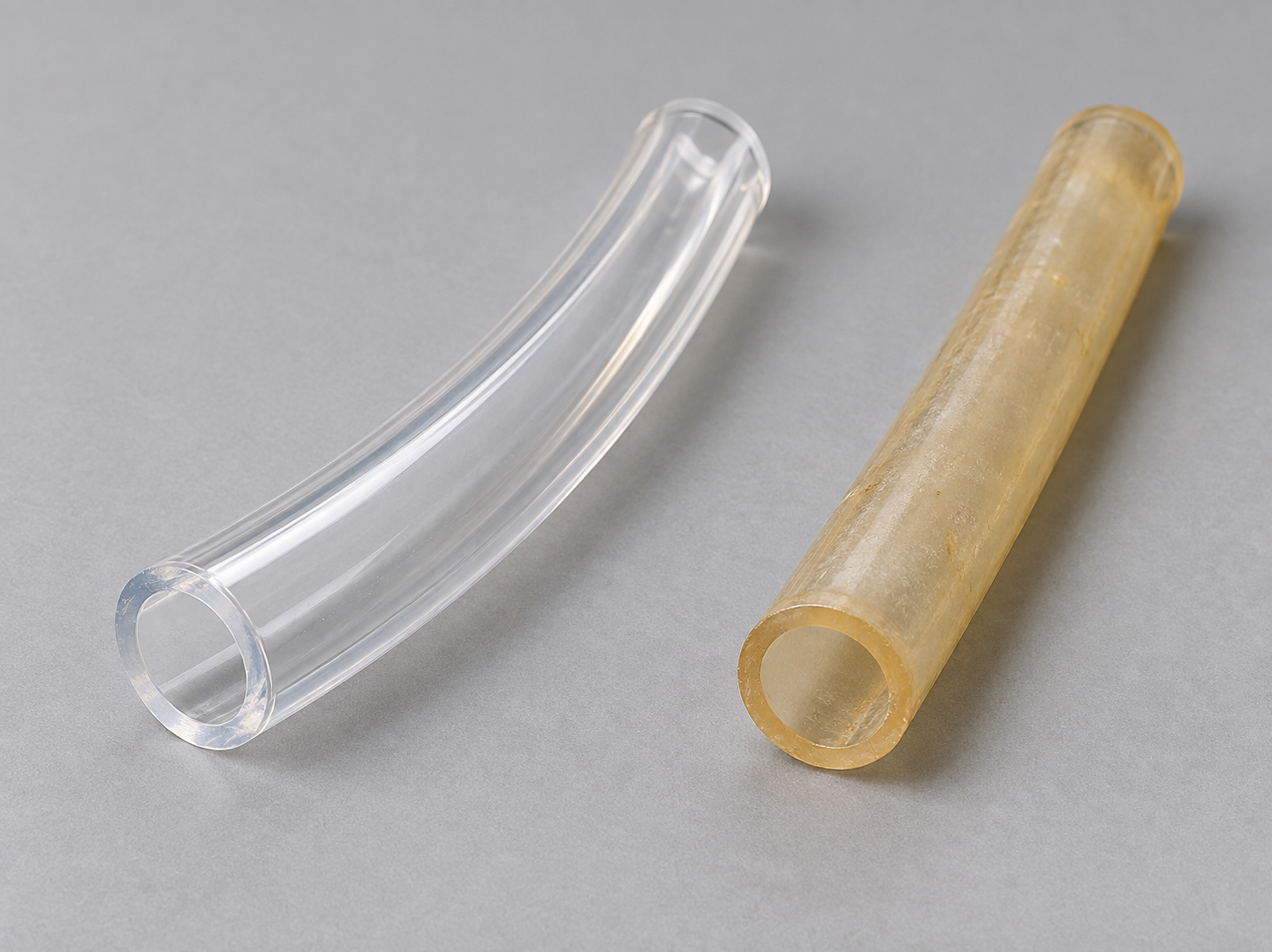
The tubing that carries ozone from the ozonator to the injection point degrades with age, turning yellow and brittle well before it visibly fails. A cracked line can leak ozone before it ever reaches the water, even if the ozonator itself is working fine.
Ozone and Your Sanitizer Choice: Chlorine vs. Bromine
The ozonator works alongside whichever sanitizer you've chosen for your AquaTerra spa, but the pairing isn't identical either way. With chlorine, ozone's contaminant-oxidizing effect means you can typically run a lower chlorine level than a non-ozonated spa would need, while still maintaining the same water clarity and safety. With bromine, the relationship is a little different, ozone breaks down organic waste the same way, but bromine tends to be favored in ozone-equipped spas partly because it holds up well alongside ozone's oxidizing action without breaking down as quickly as chlorine can under some conditions.
Whichever sanitizer you use, the ozonator doesn't change your target chemical ranges. It just means you may need to dose less frequently to stay within them. If you find yourself needing just as much sanitizer as a non-ozonated spa would require, that's worth treating as a possible sign the ozonator isn't contributing the way it should be.
Ozonator Lifespan and Replacement Schedule
UV Ozonator Bulbs: Plan on replacement every three to five years, corresponding roughly to 8,000-10,000 hours of operation, sooner with heavier daily use.
CD Ozonator Chips/Electrodes: These last considerably longer, often close to a decade, though usage intensity and water chemistry can shorten that window.
Ozone Tubing: Regardless of ozonator type, replace the connecting tubing roughly once a year. It's an inexpensive part, and a failed line undermines an otherwise fully functional ozonator.
How to Check If It's Working
A few simple checks can confirm ozone production without special equipment: look for a faint, clean, slightly metallic smell near the ozonator injection point (a strong chlorine-like smell usually points to chemistry issues rather than the ozonator itself), watch for small bubbles at the injection point during a filter cycle, and pay attention to whether water clarity holds up between cleanings compared to how it used to. If you're still unsure, a spa technician can test ozone output directly with dedicated equipment.
Maintaining Water Chemistry Alongside the Ozonator
The ozonator reduces your chemical workload, but it doesn't eliminate routine water care. Keep pH between 7.2 and 7.8 and total alkalinity between 80 and 120 ppm, and plan on a full drain and refill roughly every three to four months depending on usage. AquaTerra's control panel modes also play a role here: Standard Mode keeps water circulating and sampling periodically at your set temperature, Sleep Mode limits heating and sampling to filter cycles for a lighter-use spa, and Smart Winter Mode automatically activates to prevent freezing in the plumbing when temperatures drop, all of which affect how often water actually circulates past the ozonator and filter.
Replacement Parts to Keep on Hand
Since ozonator failure is easy to miss until water quality has already slipped, it helps to know your ozonator type ahead of time and keep the relevant replacement part on hand (a UV bulb, a CD chip, or a length of ozone tubing) rather than discovering you need one mid-troubleshooting. Prisco AquaTerra Supplies carries ozonator replacement parts sized for AquaTerra spas, so you're not stuck waiting on a special order once you've confirmed the problem.
Frequently Asked Questions
How do I know if my AquaTerra spa has a CD or UV ozonator?
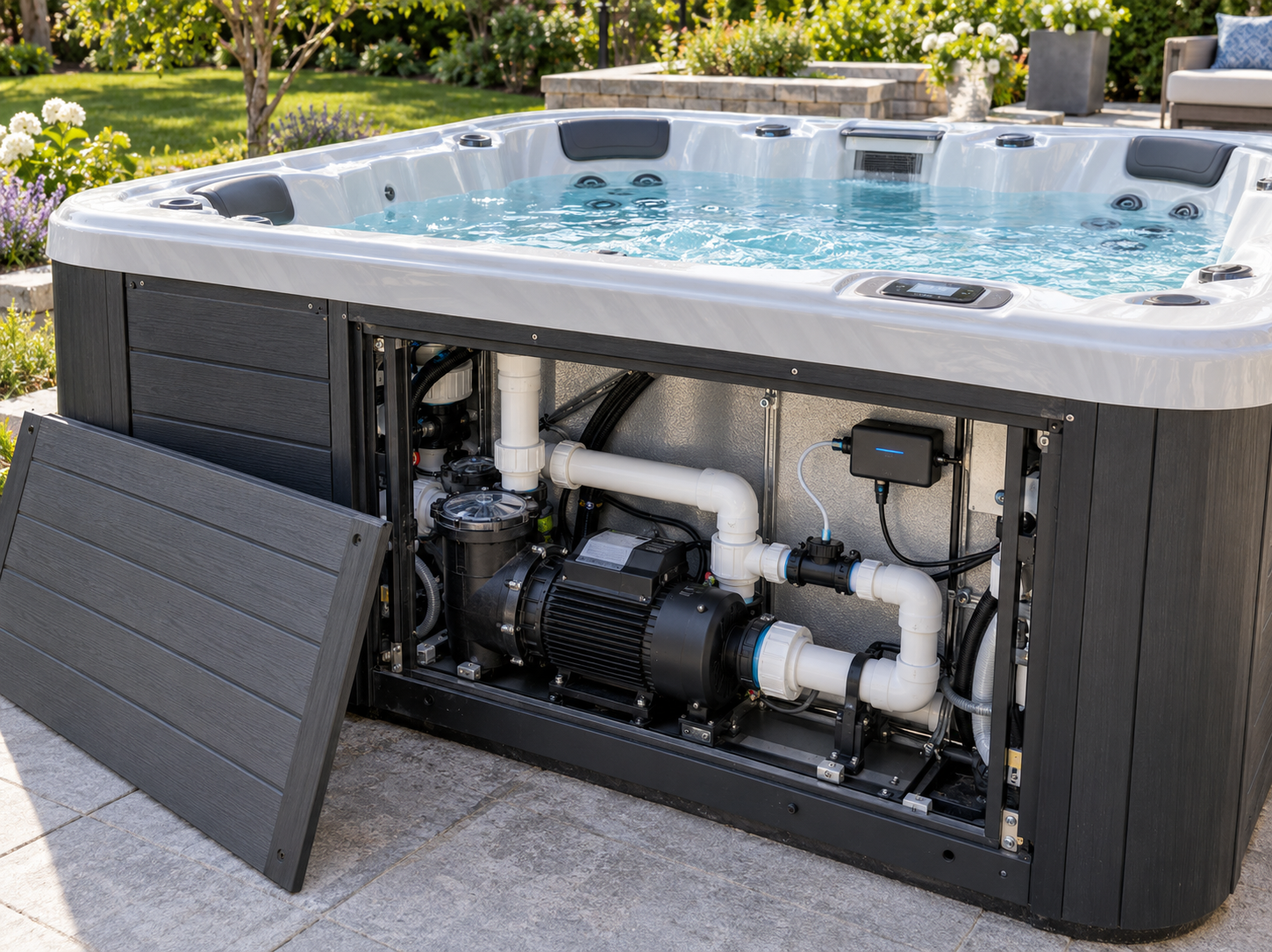
Check your owner's manual by model, or look at the unit itself in the equipment compartment, a UV ozonator has a visible bulb housing, while a CD ozonator is typically a compact sealed unit with an electrode chip inside.
Can I run my spa without a working ozonator?
Yes, but you'll need to compensate with more diligent manual sanitizing and testing, since the ozonator's normal role in reducing contaminant load and easing sanitizer demand won't be happening.
Does an ozonator replace the need for shocking my spa?
No, ozone reduces how often you need to shock, but doesn't eliminate the need entirely, especially after heavy use or when chemical readings drift out of range.
Why does my ozonator's indicator light stay on even though water quality has dropped?
On CD ozonators, the indicator light usually confirms the unit is receiving power, not that it's actively producing ozone. A lit indicator with declining water quality is still worth investigating as a possible ozonator failure.
How often should I replace the ozone tubing?
Roughly once a year, regardless of how the ozonator unit itself is performing, the tubing degrades from ozone exposure over time and is inexpensive insurance against a slow leak you'd otherwise never notice.
Should I switch from chlorine to bromine to get more out of my ozonator?
Not necessarily, both sanitizers work fine alongside an AquaTerra ozonator. The choice usually comes down to personal preference around odor and skin sensitivity rather than ozonator compatibility.
An AquaTerra ozonator is designed to work quietly in the background for years, but it's not maintenance-free forever. Know your ozonator type, replace the UV bulb or CD chip on its expected schedule, swap the tubing yearly, and watch for the indirect signs (cloudy water, unexplained algae, or heavier chemical demand) that mean it's time to check the unit rather than just adding more chemicals to compensate for a part that's quietly stopped doing its job.