
AquaTerra Spa Startup Guide: Filling and Balancing Water for the First Time
Posted by HTSS Team on Sep 7th 2026
AquaTerra Spa Startup Guide: Filling and Balancing Water for the First Time
Whether you just bought a new AquaTerra spa or you are refilling after a full drain, getting the startup water chemistry right the first time saves you from days of chasing an imbalance that never quite settles. AquaTerra's own guidance is specific about the order chemicals go in and how patient you need to be between steps, and skipping ahead is the most common way owners end up with cloudy or unbalanced water right out of the gate. This guide walks through the process from filling to a fully balanced, ready-to-use spa.
What to Gather Before You Start
Having everything on hand before you begin avoids interrupting the process partway through to run out for a missing item. You will want a reliable test strip kit or liquid test kit, total alkalinity increaser or decreaser, pH increaser and decreaser, your chosen sanitizer, and a way to track readings as you go, whether that is a simple notepad or a phone note. Having a clear target range for alkalinity, pH, and sanitizer written down before you start also helps you know exactly when to stop adjusting rather than second-guessing whether a reading is close enough.
Target Ranges to Aim For
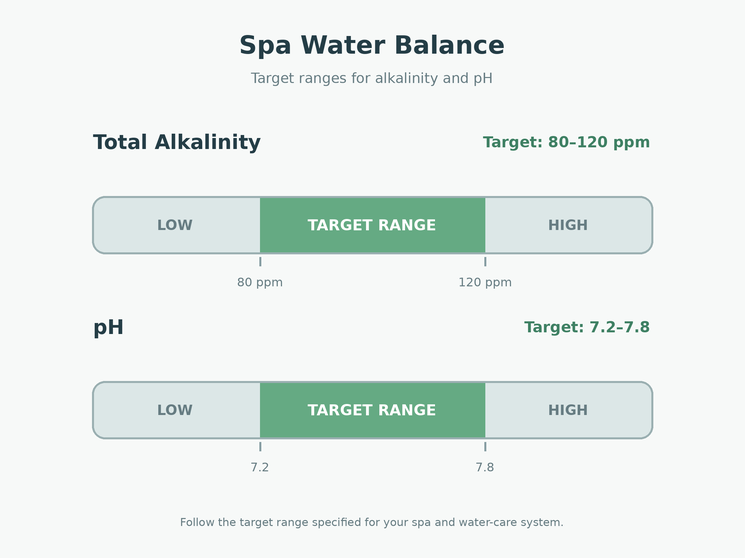
While your specific sanitizer product will have its own recommended range, general target ranges for a residential spa are roughly 80 to 120 ppm for total alkalinity and 7.2 to 7.8 for pH. Getting comfortably inside these ranges, rather than right at the edge, gives you a buffer against normal day-to-day drift once the spa is in regular use, so aim for the middle of each range rather than just barely qualifying as in range.
Before You Fill
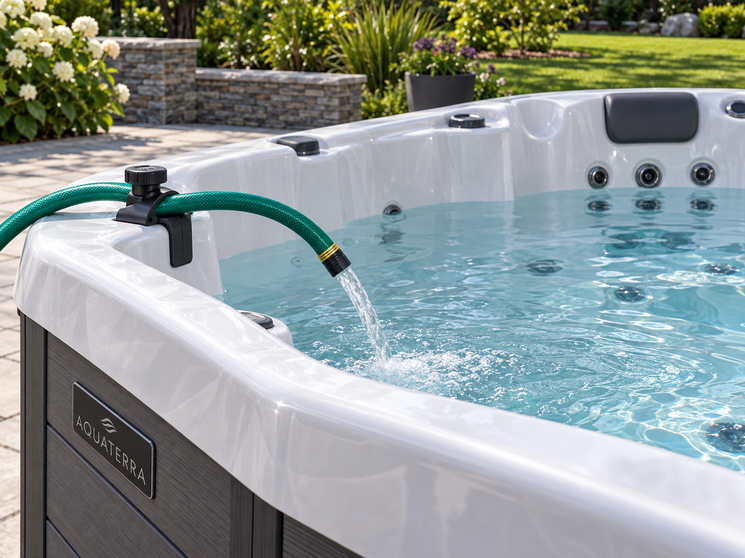
Confirm your filter is properly installed and your spa's drain valve is fully closed before adding any water. It sounds obvious, but rushing this step is a common way to end up with a slow leak or an improperly seated filter that causes problems the moment you start circulation. Use a garden hose to fill, and consider a hose-end filter designed to reduce metals and minerals in your fill water, particularly if your local water supply is known for hard water or high mineral content.
The Four-Hour Rule
AquaTerra's guidance calls for setting aside roughly four hours to get startup water chemistry properly balanced. This is not four hours of continuous work. It is four hours of a patient, step-by-step process with waiting periods built in between each addition. Trying to rush this into a shorter window is the most common reason startup chemistry ends up overshooting in one direction or another.
The Correct Order: Alkalinity, Then pH, Then Sanitizer
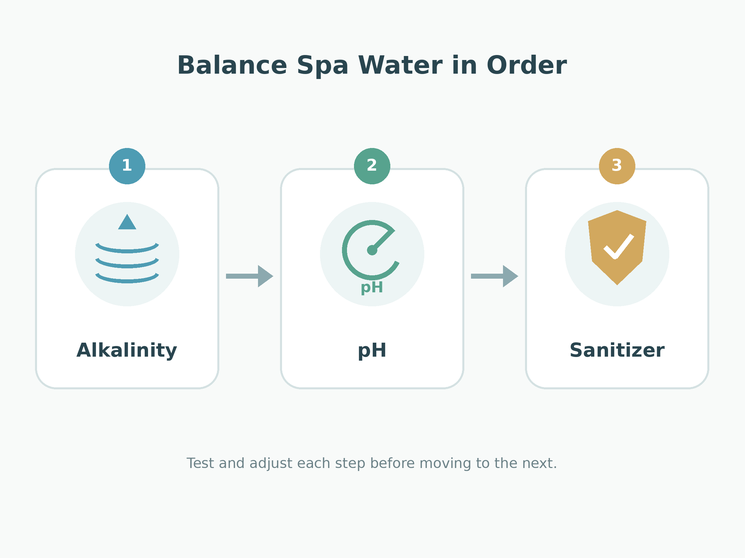
Water chemistry has a dependency order, and AquaTerra's guidance follows it specifically. Balance total alkalinity first, since alkalinity acts as a buffer that keeps pH from swinging too easily. Once alkalinity is in range, move on to pH. Only after both alkalinity and pH are properly balanced should you add your sanitizer. Adding sanitizer before the underlying chemistry is balanced wastes product, since sanitizer performs far less effectively in water that is not properly buffered and pH-balanced first.
Adding Chemicals the Right Way
Add Chemicals a Tablespoon at a Time
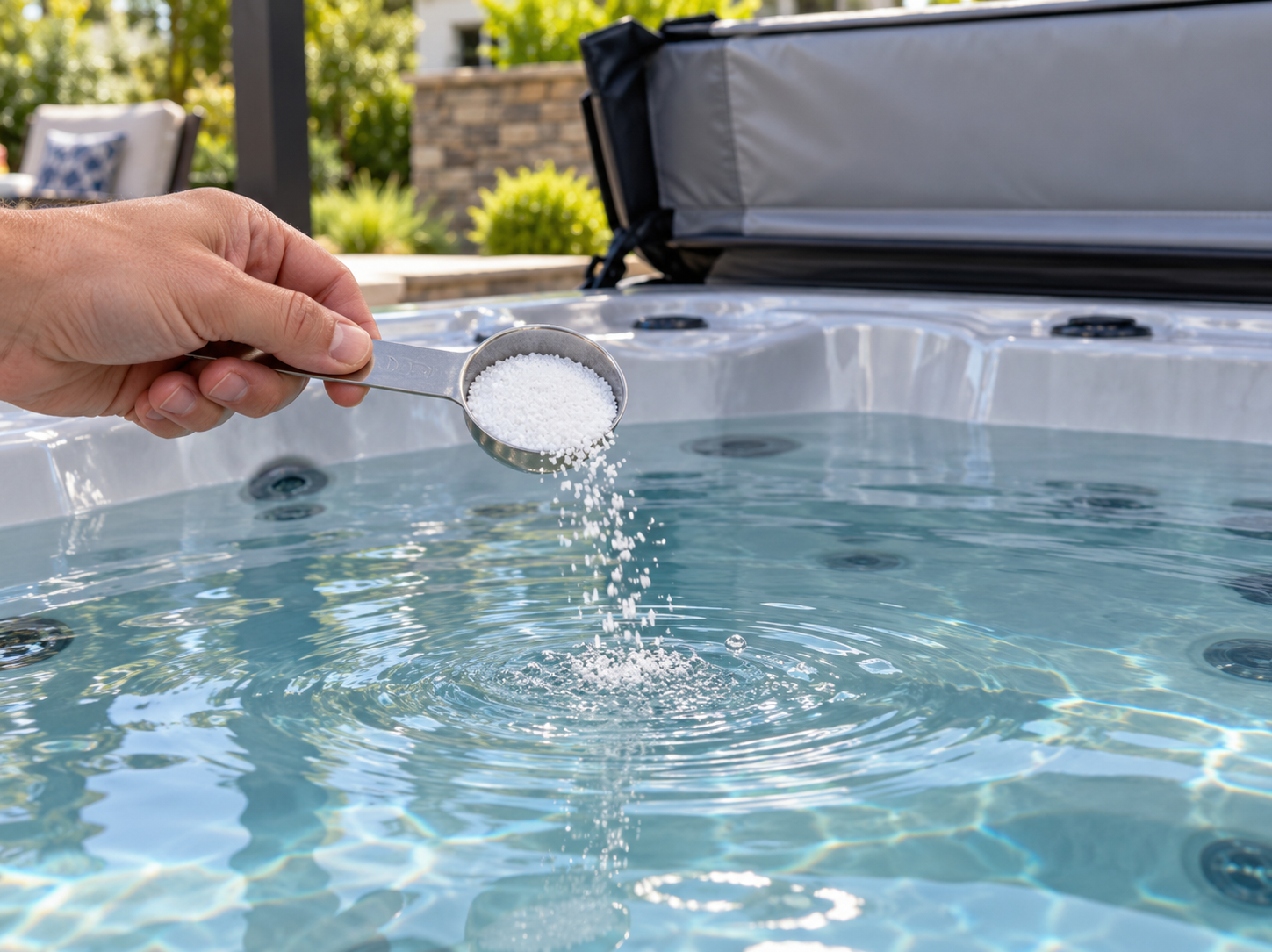
Rather than adding a large dose all at once and hoping for the best, add chemicals gradually, roughly a tablespoon at a time for a typical residential spa volume, testing between additions. This measured approach avoids overshooting your target range, which is much harder to correct than simply adding a bit more if you have undershot.
Wait Between Additions
After each addition, circulate the water and wait approximately 30 minutes before retesting. Chemicals need time to fully disperse and react with the water before a test reading accurately reflects the true level. Testing too soon after an addition gives you a reading that has not stabilized yet, which can lead you to add more than you actually need.
Never Mix Chemicals Before Adding
Add each chemical separately, directly to the water. Do not pre-mix chemicals together before adding, and always add the chemical to the water rather than adding water to a concentrated chemical, both for safety and to avoid unpredictable reactions between concentrated products.
Leave the Cover Open During and After Additions
Leave the spa cover open for at least 15 minutes after adding any chemical. This allows gasses released during the reaction to dissipate safely rather than building up under a closed cover, and it gives you a chance to visually monitor the water as it circulates.
What to Do If You Overshoot
If a reading comes back higher than your target range after the recommended wait period, do not immediately add a counteracting chemical on top of it. First, verify the reading is accurate by retesting, since a false high reading is more common than an actual overshoot when the process is followed correctly. If the overshoot is confirmed, correct gradually using the appropriate chemical in the same small, incremental doses as the original process, rather than trying to correct it all at once.
First Use After Startup
Once alkalinity, pH, and sanitizer are all confirmed within range, allow the spa to circulate for a full cycle before your first soak. This gives the newly balanced water a chance to fully mix throughout the plumbing and jets, not just the visible water in the shell, which can otherwise leave localized pockets of unbalanced water even after your test strip reads correctly at the surface.
How Startup Differs for a Refill Versus a Brand New Spa
A brand new AquaTerra spa and a spa being refilled after a routine drain both go through the same basic startup process, but a refill often goes faster in practice, simply because you already have a working sense of how your specific local water responds to the chemicals you use. A brand new spa owner is starting from zero information, which is exactly why following the process patiently the first time, rather than guessing based on general spa ownership experience elsewhere, pays off with a more predictable result.
Ongoing Testing After Startup
Startup balancing is more intensive than ongoing maintenance, but it sets the tone for how easy your regular water care will be afterward. Water balanced correctly from the start tends to drift less and require smaller, less frequent corrections going forward, compared to water that was rushed through an incomplete startup process.

Frequently Asked Questions
Why does the order of alkalinity, pH, and sanitizer matter so much?
Alkalinity buffers the water and keeps pH stable once adjusted. Adjusting pH before alkalinity is balanced often means the pH will not hold, and adding sanitizer before both are correct wastes product since sanitizer works far less effectively in improperly buffered water.
Can I speed up the four-hour startup process?
It is not recommended. The waiting periods between chemical additions exist because chemicals need time to fully react and disperse before an accurate test reading is possible. Rushing typically leads to overshooting and a longer overall correction process.
What should I do if my water looks cloudy right after startup?
Cloudiness shortly after filling is often related to dissolved minerals in the fill water reacting with new chemicals, and it frequently clears within the first full filter cycle as everything circulates and settles. Persistent cloudiness after that point is worth investigating further.
Is a hose-end filter necessary when filling my AquaTerra spa?
It is not strictly required, but it is a reasonable precaution if your local water supply has high mineral content or heavy metals, since it can reduce startup chemistry complications caused by the fill water itself.
How soon can I use the spa after completing startup balancing?
Once alkalinity, pH, and sanitizer are all confirmed in range and the water has circulated through a full cycle, the spa should be ready for use.
Does startup take the same amount of time for a refill as for a brand new spa?
Usually yes, since the same chemistry principles and waiting periods apply either way. A refill can feel more predictable simply because you already know how your local water responds from prior experience.
A properly balanced AquaTerra startup takes patience more than complexity: the right order, small incremental additions, and genuine waiting periods between steps. Follow that process once at the start, and your ongoing water care will be considerably easier for the life of that fill.